

Author, Autumn, Writing
Betting on Tomorrow: The Future of Gambling in a Sci-Fi World
And yet, the thrill remains the same. Whether the cards are plastic or photons, humans will always chase the high of what if I win this hand?
I’ve been living in the world of High Stakes for months now—writing about blackjack tables, casino scams, and the thrill of beating the house. But lately, I’ve been wondering: what happens when the house becomes a super-intelligent AI, and the tables are holographic projections floating in orbit?
Let’s take a trip into the future—where luck meets technology, and the psychology of gambling gets a full-blown sci-fi makeover.
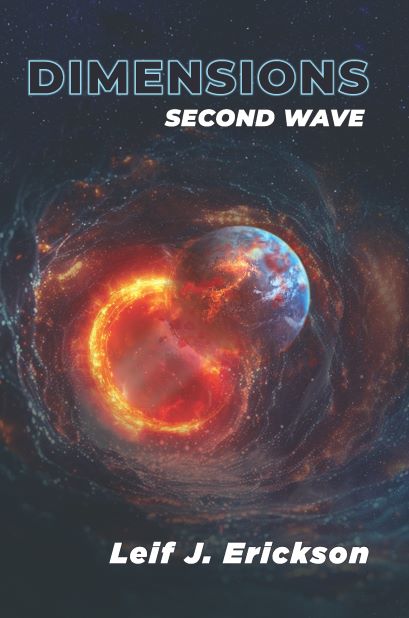
Check Out Leif's Books on Amazon


The Neon Never Sleeps
Casinos of the future won’t be confined to Vegas or Macau. They’ll exist everywhere—built into the metaverse, layered into augmented reality, even orbiting Mars for those high-roller colonists looking to blow off steam between terraforming shifts.
Picture it: a player steps into a sleek VR parlor, their digital avatar slipping into a seat at a quantum-randomized blackjack table. Instead of cards, shimmering holograms flicker before them, each pixel coded with a level of entropy that even Einstein would’ve called unfair. The stakes? Cryptocurrency tethered to the real world—because who wants chips when your winnings can fluctuate faster than your heart rate?
And yet, the thrill remains the same. Whether the cards are plastic or photons, humans will always chase the high of what if I win this hand?
The Rise of the Algorithmic Casino
In our time, casinos are designed to exploit human behavior—the flashing lights, the lack of clocks, the illusion of control. In the future, that design will go full algorithm.
Imagine AI-run casinos that adjust odds dynamically based on your emotional data. Smart tables read your pulse through micro-vibrations in the seat. Contact lenses track your pupils to measure excitement or fatigue. The system tailors the experience in real time—offering smaller wins when you’re frustrated, bigger risks when you’re confident. It’s part entertainment, part manipulation, all business.
And the best part? You’ll probably thank the casino for “understanding you so well.”
Quantum Luck: When Random Isn’t Random Enough
Today’s slot machines rely on random number generators. In the sci-fi future, randomness gets an upgrade: quantum gambling. Using quantum entanglement, casinos could create games where outcomes exist in multiple states until observed—literally Schrödinger’s slot machine. You won’t just spin the reels—you’ll collapse probability itself.
Casinos will sell it as the ultimate fairness—“no human bias, pure quantum chance!” But let’s be honest: somewhere, a physics grad will figure out how to tilt those probabilities, and a new generation of card counters will be born—armed with entangled dice and neural implants instead of notebooks and sunglasses.
The Return of Skill
In the 20th century, casinos moved away from skill-based games because they were too beatable. In the future, expect a swing back. Gamblers of tomorrow will demand interactivity—AR poker tournaments across continents, strategy-based digital heists, and multiplayer betting games that blend Call of Duty with Ocean’s Eleven.
Picture e-sports meets blackjack: players wearing haptic suits, bluffing across light-years, their digital tells monitored by millions of spectators in real time. Winning won’t just mean knowing the odds—it’ll mean mastering psychology, game theory, and probably a few lines of code.
Of course, casinos will find a way to take their cut. The house always wins—eventually, even in space.
Addiction in the Age of AI
It’s impossible to talk about gambling’s future without talking about its darker side. Right now, slot machines and mobile apps use algorithms to keep players hooked. Tomorrow’s tech will take that to terrifying new heights.
AI will learn your habits faster than you can change them. It will adapt—quietly nudging your dopamine receptors until you can’t walk away. Imagine a game that senses when you’re about to quit, then shows you a “near win” to pull you back in. Sound familiar? Now imagine it personalized to your exact neurochemistry.
There’s an unsettling irony in that: as we evolve, so do our vices.
But maybe, just maybe, technology can be part of the cure too. Future casinos might include built-in “mindfulness modes” that nudge players to take breaks, track their spending, or even reward restraint. Because in a world where data is currency, self-control might be the most valuable hand of all.
When the House Is the Cloud
The biggest shift might be philosophical. In a future where casinos live in the cloud, the line between “player” and “system” blurs. You’ll log in through retinal ID, wager tokens on interplanetary servers, and cash out via blockchain. Every transaction will be instantaneous, transparent, and impossible to fake.
But here’s the twist: the casino might not be owned by people at all. Picture a fully autonomous casino run by an AI collective—no pit bosses, no dealers, just an evolving algorithm whose sole directive is to optimize entertainment (and profit). The AI wouldn’t cheat, but it wouldn’t need to. It would learn you.
It would become the perfect opponent.
The Human Element
And yet, no matter how futuristic things get, one truth will never change: people gamble not for the math, but for the moment. The pulse-racing thrill of risk, the joy of a win, the sting of a loss. The chase.
In High Stakes, that’s what drives my characters—the tension between control and chaos, reason and risk. Whether it’s card counting in a Vegas casino or betting against an AI dealer on Mars, gambling isn’t just about money. It’s about human nature.
In the end, it’s not the game that matters. It’s the gamble.
The Final Bet
So, what will gambling look like in the future? Maybe we’ll trade chips for crypto, dealers for droids, and dice for quantum processors. But the essence will stay the same: hope versus odds. It’s a story as old as civilization, just wrapped in better graphics and faster code.
And if I had to place a bet? I’d say humans will keep finding new ways to risk everything—for the same reason we always have. Because sometimes, in the blink of an eye, the thrill of uncertainty feels like victory itself.
Until next time—play smart, keep your odds realistic, and maybe leave the quantum slot machines to the professionals.
About Leif J. Erickson
Leif J. Erickson is a science fiction and fantasy author from a small farming community in west central Minnesota. Using his time wisely when he was a farmer, Leif developed many ideas, characters, and storylines to create over fifty unique first drafts and outlines for stories. From his start in a small town school, to college at North Dakota State University, back to his family farm, then to the bright lights of Minneapolis, Minnesota, and back to his small farming town, Leif has always had a love of writing.
When Leif isn’t writing he can be found with his wife hiking in state parks, canoeing local lakes and rivers, exploring local and regional ghost towns, experiencing museums, or simply reading or hanging out with friends and family. Leif draws on the local nature and ecology to find inspiration for his writing while he also asks what’s possible for technology and the human race, weaving them together for amazing stories that will stay with the reader for years to come. Leif looks forward to having many novel and story releases in the years to come.
You can see all of Leif’s Books here: Leif’s Amazon Author Page


Related posts





My Books











FOLLOW ME


Leave a reply
You must be logged in to post a comment.