

Adventure, Author, Mystery
Lights, Camera, Blackjack: Casinos in the Movies vs. Real Life
Let’s start with one of Hollywood’s favorite myths: card counting as a superpower.
Let’s be honest—Hollywood has taught most of us everything we think we know about casinos. Whether it’s Daniel Ocean smooth-talking his way through Ocean’s Eleven, James Bond ordering his martini “shaken, not stirred” in Casino Royale, or Alan from The Hangover counting cards like a math savant in Vegas, the movies make gambling look glamorous, dangerous, and just the right amount of illegal.
So truly—thank you.
Check Out Leif's Books on Amazon


But how much of that is real—and how much is cinematic sleight of hand? Since High Stakes dives deep into the world of blackjack and casino culture, I thought it would be fun to peel back the curtain and take a look at what movies get right, what they get hilariously wrong, and what’s pure fantasy.
What Movies Get Right
First, credit where it’s due: some filmmakers nail the tension and psychology of gambling.
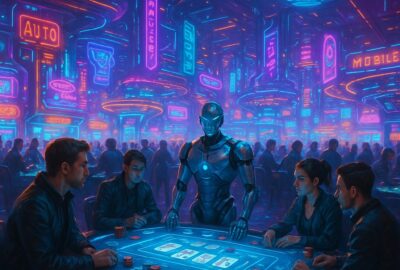
Casinos really do have that electric energy—an intoxicating mix of hope, greed, and adrenaline that keeps people glued to the tables at 3 A.M. The lights are bright, the drinks flow freely, and the soundtrack of shuffling chips and whirring slots is practically engineered to make you lose track of time.
Movies like Casino (1995) and Rounders (1998) capture that perfectly. Scorsese’s Casino gives you the behind-the-scenes reality of how the house runs things: the security, the surveillance, and the subtle manipulations that keep players playing. Rounders, meanwhile, gets the psychology right—the way poker players read each other’s tells, calculate odds, and convince themselves that luck is just a skill they haven’t mastered yet.
Even Casino Royale does a decent job depicting the high-stakes glamour of VIP tables. Sure, Bond’s poker hands are cinematic perfection, but the tension, the bluffing, the psychological warfare—that’s all spot-on. The best gambling scenes in movies aren’t about cards or dice; they’re about control, risk, and human nature.
What Movies Get Wrong
Now, for the fun part.
Let’s start with one of Hollywood’s favorite myths: card counting as a superpower. If you believed 21 or Rain Man, you’d think card counters are math wizards who can walk into any casino, make a fortune, and leave in a cloud of confetti.
Reality check: card counting isn’t illegal, but it’s not easy, either. It requires intense focus, practice, and the ability to keep your emotions (and face) completely neutral. And even if you pull it off, the casino will spot you faster than you can say “split the eights.” Surveillance technology is so advanced now that anyone showing even the slightest edge over the house will get politely asked to leave—or not so politely escorted out.
Then there’s the idea that casinos are constantly being robbed by charming, morally ambiguous masterminds. (Looking at you, George Clooney.) In real life, casino security is like the Secret Service with better lighting. There are cameras on every square inch of the floor, facial-recognition systems, and trained observers watching for the slightest irregularity. You could count the number of successful modern casino heists on one hand—and you’d probably still have fingers left over.
And don’t get me started on slot machines. Movies love showing people hitting jackpots at the perfect emotional moment, as if fate itself is the dealer. In reality, slot machines use random number generators, and your odds of hitting a big payout are about the same as finding a winning lottery ticket taped under your chair.
Oh, and those glamorous high-rollers in tuxedos and evening gowns sipping champagne? They exist, sure—but so do the tourists in sweatshirts nursing free cocktails and muttering at the penny slots. Vegas is a mix of spectacle and chaos. It’s less “Monte Carlo fantasy” and more “Disneyland for adults who forgot what time it is.”
What’s Completely Made Up
Hollywood’s favorite invention: the lucky streak that changes everything.
In Maverick, The Cooler, or Mississippi Grind, you’ll see heroes who are cursed with bad luck suddenly hit a hot streak and win back everything in one dramatic moment. Cue the slow-motion montage, the triumphant soundtrack, and the perfectly timed champagne pop.
Real life? Not so much. The math doesn’t care about your redemption arc. Casinos operate on probabilities, not poetic justice. And while we all love a story where the underdog beats the system, the truth is that the system’s edge is baked in. The house doesn’t rely on cheating; it relies on time—and the longer you play, the more certain it is to win.
Another myth? That dealers are all secret allies or enemies. In reality, dealers don’t care if you win or lose. They’re paid hourly, not on commission. Sure, they might root for you if you’re fun or generous with tips, but the days of dealers winking and sliding you an extra ace belong squarely in movie land.
And finally, the “I can feel it” moment—when a character bets it all on intuition. In Molly’s Game, The Gambler, or Uncut Gems, you’ll see protagonists trusting a gut feeling that magically pays off. It makes for great drama, but in the real world, that’s called “gambler’s fallacy.” Spoiler alert: it doesn’t end well.
Why We Love the Fantasy
So why do we keep buying into the myths?
Because casinos are already cinematic. They’re full of color, risk, and human emotion. Every spin of the wheel, every shuffle of the deck, is a little story in itself. The allure of the casino isn’t just about money—it’s about possibility. Movies just amplify that feeling, wrapping it in perfect lighting and a soundtrack by Hans Zimmer.
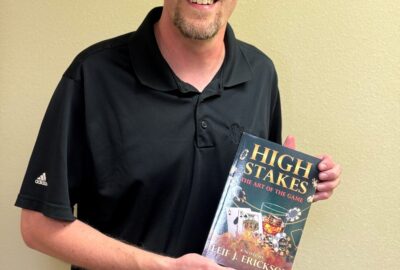
In High Stakes, I tried to capture both sides: the movie-worthy thrill of the game and the gritty reality behind it. The math, the discipline, the psychology—it’s all there, but so are the dreams, the desperation, and the temptation that make gambling such a perfect metaphor for life.
So the next time you watch a character hit the jackpot in the final act, just remember: in real life, the house almost always wins. But in fiction? The house never stood a chance.
About Leif J. Erickson
Leif J. Erickson is a science fiction and fantasy author from a small farming community in west central Minnesota. Using his time wisely when he was a farmer, Leif developed many ideas, characters, and storylines to create over fifty unique first drafts and outlines for stories. From his start in a small town school, to college at North Dakota State University, back to his family farm, then to the bright lights of Minneapolis, Minnesota, and back to his small farming town, Leif has always had a love of writing.
When Leif isn’t writing he can be found with his wife hiking in state parks, canoeing local lakes and rivers, exploring local and regional ghost towns, experiencing museums, or simply reading or hanging out with friends and family. Leif draws on the local nature and ecology to find inspiration for his writing while he also asks what’s possible for technology and the human race, weaving them together for amazing stories that will stay with the reader for years to come. Leif looks forward to having many novel and story releases in the years to come.
You can see all of Leif’s Books here: Leif’s Amazon Author Page


Related posts



My Books





FOLLOW ME


Leave a reply
You must be logged in to post a comment.