

Books, Novel, Writing
The Book That Refuses to Leave the Party
The book wasn’t loud about it. It didn’t preach. It simply showed.
Every few years, America rediscovers The Great Gatsby.
Someone adapts it. Someone assigns it. Someone declares it overrated. Someone else insists it’s the Great American Novel. The arguments flare up, the green light glows again, and suddenly we’re all back at the party.
And here’s the strange thing:
It never actually left.
When The Great Gatsby was published in 1925 by F. Scott Fitzgerald, it wasn’t an instant cultural earthquake. It sold modestly. It reviewed decently. It didn’t exactly set the world on fire. Fitzgerald died believing it was something of a disappointment.
Which is ironic, because the novel is largely about a man who throws dazzling parties while quietly feeling like he hasn’t quite made it.
The real explosion came later, after World War II, when the book was reprinted and assigned in classrooms. That’s when Gatsby stopped being just a novel and started becoming a mirror.
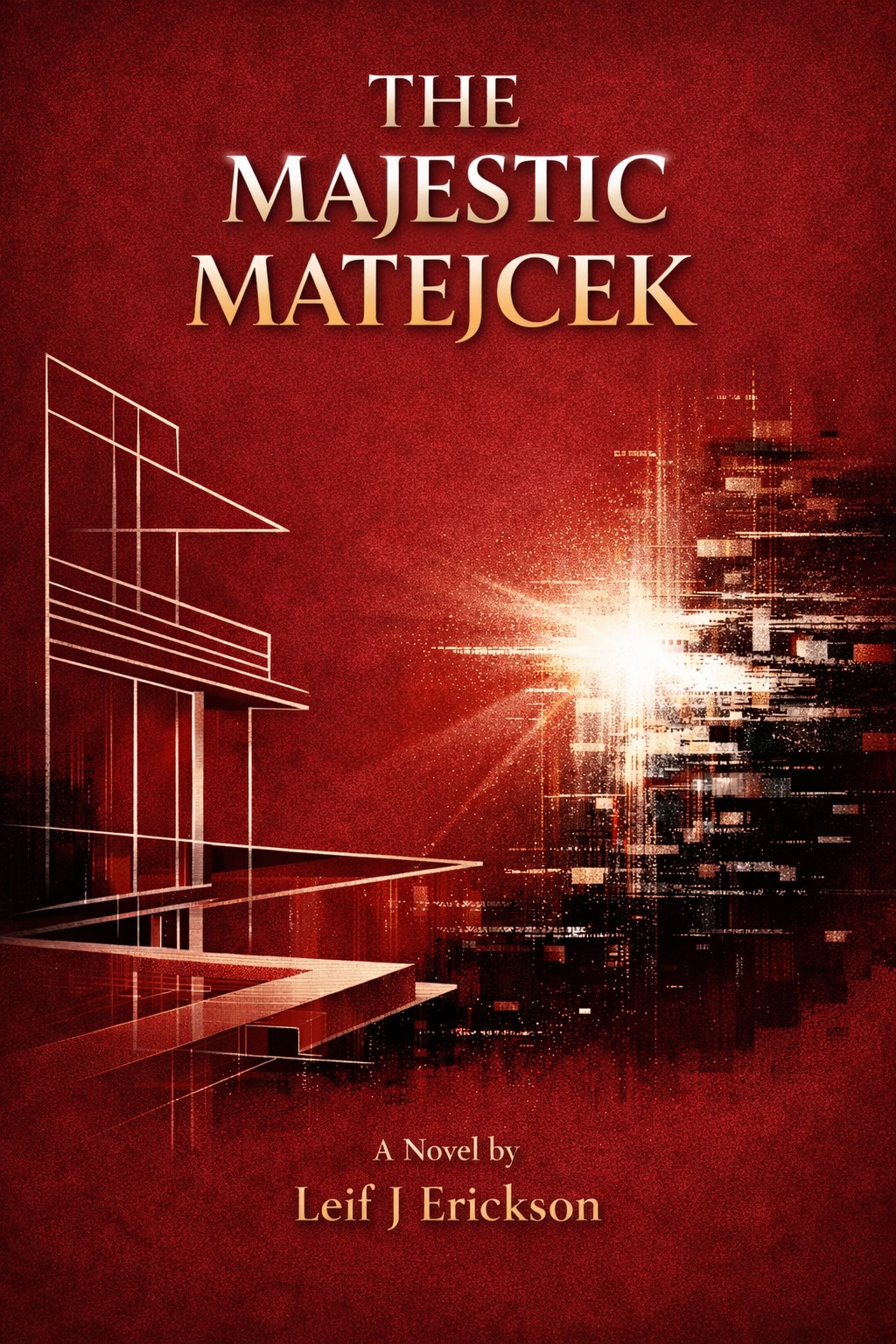
Check Out Leif's Books on Amazon


Why It Hit in the 1920s (Even If People Didn’t Know It Yet)
The 1920s were loud.
Jazz. Bootleg liquor. Speculation. New money. Flashy cars. A stock market that seemed to only go up. It was an era intoxicated with progress.
Gatsby arrived like a quiet voice at the edge of the dance floor saying, “Are we sure about this?”
The novel tapped into something that people felt but didn’t quite articulate yet: that the American Dream had begun to shift. It wasn’t about hard work and character anymore, it was about spectacle. Reinvention. Performance. The ability to project success convincingly enough that others would believe it.
Sound familiar?
Back then, readers may not have consciously recognized how sharply Fitzgerald was critiquing the culture, but the undercurrent was there. Beneath the champagne and the orchestras, there was rot. Beneath the charm, desperation. Beneath the hope, illusion.
The book wasn’t loud about it. It didn’t preach. It simply showed.
And that subtlety is part of why it lasted.
Why It Still Resonates Now
Fast-forward nearly a century, and we’re still arguing about Gatsby.
Why?
Because the American Dream hasn’t gotten simpler.
If anything, it’s gotten shinier.
Social media has replaced the party lawn. The curated image has replaced the tailored suit. Reinvention happens daily, not just once. We’re still fascinated by wealth, still suspicious of it, still chasing proximity to it.
Gatsby’s core tension, who we are versus who we present ourselves to be, is more relevant now than it was in 1925.
The novel also refuses to give us a clean hero or villain. Gatsby is admirable and delusional. Daisy is charming and careless. Nick is observant but complicit. No one escapes cleanly.
That moral ambiguity feels modern. It feels honest. It feels uncomfortable in the right way.
And then there’s the prose.
Fitzgerald’s writing is lean but luminous. At around 50,000 words, the novel is tight, almost shockingly so by today’s standards. There’s very little wasted motion. A single image can carry pages of meaning. A single line can haunt you for years.
It’s proof that brevity and depth are not enemies.
Why Schools Keep Teaching It
Part of Gatsby’s endurance comes from inertia, sure. Once a book enters the canon, it tends to stay there.
But teachers keep assigning it for a reason.
It’s short enough to finish in a semester. It’s layered enough to reward close reading. It opens discussions about ambition, identity, class, morality, and illusion. Teenagers read it one way. Adults read it another. Writers read it differently still.
It grows with you.
That’s rare.
And maybe more importantly, it asks uncomfortable questions without telling you what to think. It doesn’t wag a finger. It just turns on the light and lets you look around.
Where Does Gatsby Go From Here?
That’s the interesting part.
Some books fade when their era passes. Gatsby seems to sharpen.
Every time we go through an economic boom. Every time speculation runs wild. Every time wealth becomes spectacle again. Every time reinvention becomes brand strategy. The novel quietly clears its throat.
We keep staging it. Refilming it. Reanalyzing it. Not because we don’t understand it, but because we recognize ourselves in it again.
In the future, Gatsby will likely continue to morph. It will be adapted through new technologies. It will be reframed through new cultural lenses. It will be criticized, defended, reinterpreted, and rediscovered.
The setting may feel distant, flappers and roadsters and West Egg lawns, but the themes are not.
That’s the trick of a true classic. It doesn’t belong to one generation. It waits for the next one to catch up.
Why It’s Worth Revisiting
If you haven’t reread The Great Gatsby in a while, it’s worth going back, not to confirm what you already think, but to see what hits differently now.
You might notice the quiet sadness more than the glamour. The emptiness more than the excess. The longing more than the luxury.
Or you might notice something else entirely.
That’s the beauty of it.
Some books are of their time. Others are about time. And a very small number seem to exist outside of it entirely.
Gatsby, for all his bravado and green-light dreaming, somehow managed to slip into that last category.
And every few years, we find ourselves drawn back to the edge of the water, wondering what exactly we’re reaching for.
More on that soon.
About Leif J. Erickson
Leif J. Erickson is a science fiction and fantasy author from a small farming community in west central Minnesota. Using his time wisely when he was a farmer, Leif developed many ideas, characters, and storylines to create over fifty unique first drafts and outlines for stories. From his start in a small town school, to college at North Dakota State University, back to his family farm, then to the bright lights of Minneapolis, Minnesota, and back to his small farming town, Leif has always had a love of writing.
When Leif isn’t writing he can be found with his wife hiking in state parks, canoeing local lakes and rivers, exploring local and regional ghost towns, experiencing museums, or simply reading or hanging out with friends and family. Leif draws on the local nature and ecology to find inspiration for his writing while he also asks what’s possible for technology and the human race, weaving them together for amazing stories that will stay with the reader for years to come. Leif looks forward to having many novel and story releases in the years to come.
You can see all of Leif’s Books here: Leif’s Amazon Author Page

Related posts





My Books








FOLLOW ME


Leave a reply
You must be logged in to post a comment.