

Christmas, Seasons
From Ghosts to Gizmos: How Christmas Storytelling Has Changed (and Where It’s Going)
Suddenly, Christmas stories didn’t have to be quiet or solemn. They could be slapstick, action-packed, or downright ridiculous.
Well, the lights are up, the radio has declared a hostile takeover via Mariah Carey, and every store within a hundred miles now smells like cinnamon pinecones and fiscal panic. That can only mean one thing: we are fully in the Christmas season.
And as always, my mind turns to stories.
Christmas and storytelling go together like hot cocoa and tiny marshmallows—they’ve always belonged side by side. But the types of Christmas stories we tell? Those have changed more than a shopping mall Santa’s beard elasticity over the years.
Let’s take a little sleigh ride through the evolution of Christmas storytelling—where it’s been, what changed it, and where it might be headed.
Check Out Leif's Books on Amazon


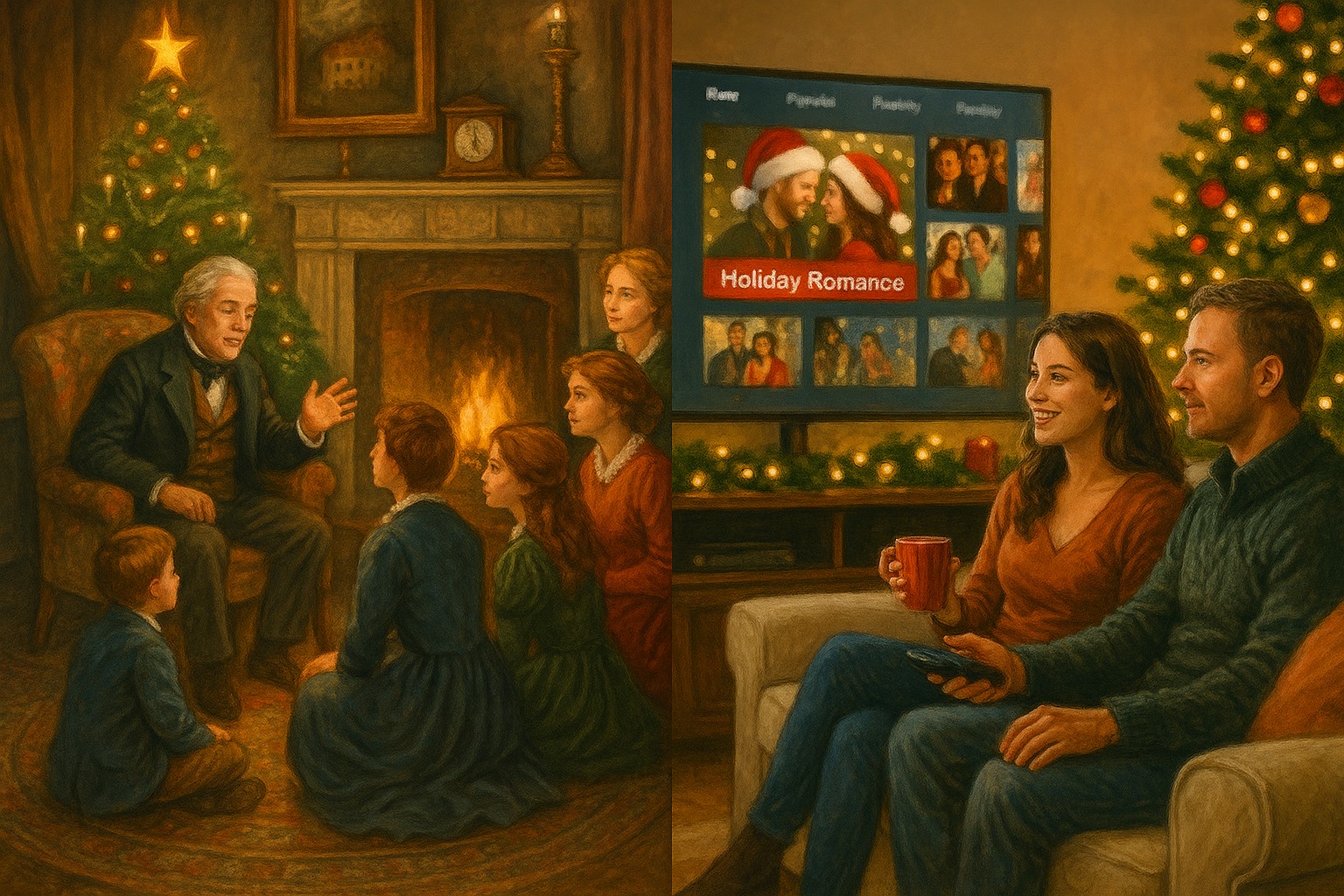
The Early Days: When Christmas Was… Spooky?
Before the Hallmark Channel got involved—back when Christmas trees were lit with open flames and nobody had heard of Eggnog Frappuccinos—Christmas storytelling had a distinctly eerie flavor.
And the reason is simple: long winter nights + flickering firelight + people stuck indoors = ghost stories.
In Victorian England, Christmas was practically synonymous with supernatural tales. Dickens didn’t invent the trend—he just perfected it. A Christmas Carol is a ghost story at its core, a haunting wrapped in virtue and redemption. Dickens gave us the Christmas spirit, sure—but he also gave us literal spirits, dragging chains.
Back then, Christmas wasn’t all about sentimentality. It was a time for reflection, reckoning, and a little fear—because nothing says “Merry Christmas” like your dead business partner rattling at the window.
The 20th Century: Coca-Cola, Nostalgia, and the Birth of Modern Cheer
Then the 20th century rolled in and, thanks to industrialization, advertising, and the world’s quickest-growing beverage company, Christmas took a hard pivot toward cheer and nostalgia.
Santa became jolly and marketable (thanks, Coca-Cola). Holiday cards became a booming business. Electricity lit up decorations. Hollywood figured out there was a market for warmth, whimsy, and snow that always falls in perfect flakes.
This era gave us:
- It’s a Wonderful Life (hope restored by divine intervention),
- Miracle on 34th Street (legal drama meets Santa),
- White Christmas (nostalgia sprinkled with musical numbers),
- And many more—each reinforcing the idea that Christmas is a magical balm for the human condition.
Even when the stories weren’t about miracles, they were about belonging. Coming home. Choosing kindness. Reconciliation. Christmas became less spooky and more sentimental—though in the best way.
The Late 20th Century: The Age of Chaos, Commercials & Comedies
Then came the 80s and 90s, a period when Christmas storytelling became… let’s call it more adventurous.
Enter:
- Home Alone (child endangerment, but make it wholesome),
- National Lampoon’s Christmas Vacation (holiday disasters turned into bonding),
- The Santa Clause (accidental Santa homicide but quirky),
- Jingle All the Way (consumerism with muscles),
- Die Hard (is it a Christmas movie? Yes. Yes, it is.)
Suddenly, Christmas stories didn’t have to be quiet or solemn. They could be slapstick, action-packed, or downright ridiculous. They reflected the chaotic joys and frustrations of the holidays. Traffic, shopping, family arguments, burned turkeys—relatable and cathartic.
It wasn’t about whether miracles were real; it was about whether the main character would survive the in-laws.
The 21st Century: Algorithm-Approved Christmas
Now we arrive in the digital age, where Christmas storytelling is shaped by two major forces:
- Streaming platforms
- Corporate branding that is aggressively merry
We’ve entered the Hallmark/Netflix Era, where the plot of 70% of Christmas movies can be summarized as:
A big-city woman finds love with a small-town carpenter who owns exactly one flannel shirt but infinite emotional availability.
It’s cozy. It’s predictable. It’s comforting. It’s gingerbread in story form.
At the same time, Christmas stories have become more inclusive, more global, more reflective of today’s families and traditions. We have comedies like Elf, crass-but-heartfelt stories like Bad Santa, modern classics like The Christmas Chronicles, and hundreds (thousands?) of made-for-streaming holiday romances.
It’s an era of abundance and accessibility. Whatever type of Christmas story you want, it’s out there.
What Caused These Changes?
Several things:
- Technology: From the printing press to streaming, new mediums create new traditions.
- Cultural Shifts: We moved from agrarian to industrial to digital—Christmas stories evolved with us.
- Marketing: Let’s be honest, holiday storytelling is also a business, and the business knows what sells.
- Changing Values: As society shifts, so do the themes of our stories—representations of family, community, and what “holiday spirit” means.
Christmas storytelling isn’t static because we aren’t static.
The Future of Christmas Stories: Predictions Worth Wrapping Up
So what’s next?
Here’s my guess:
- Christmas will get weird again.
We’re overdue for new creative risks—sci-fi Christmas tales, horror-comedies, time loops, alternate universes, AI Santas who malfunction spectacularly. (I’m not saying I’ll write one… but I’m also not not saying that.) - More inclusive holiday traditions.
We’ll see stories celebrating a broader range of winter holidays, blended families, and new rituals. - More “adult” Christmas stories.
Not that kind—get your mind out of the gingerbread gutter. I mean complex narratives: grief, healing, reconnection, meaningful character arcs wrapped in fairy lights. - Interactive Christmas storytelling.
VR Christmas adventures, choose-your-own-holiday films, immersive digital experiences—coming soon to a living room near you.
And honestly? I think we may even see a return to the supernatural. There’s something timeless about a Christmas ghost story. Dickens knew it. The Victorians knew it. And deep down, we do too.
To Wrap It All Up…
Christmas storytelling is a reflection of who we are at any given moment—our fears, our hopes, our sense of humor, our nostalgia. From spooky fireside tales to cozy streaming romances, every era leaves its mark.
The stories will keep evolving, because we keep evolving.
But the heart of it—connection, joy, warmth, wonder—that stays the same.
Now if you’ll excuse me, I’m off to put on my annual viewing of It’s a Wonderful Life, followed immediately (and unapologetically) by Die Hard.
Merry reading,
About Leif J. Erickson
Leif J. Erickson is a science fiction and fantasy author from a small farming community in west central Minnesota. Using his time wisely when he was a farmer, Leif developed many ideas, characters, and storylines to create over fifty unique first drafts and outlines for stories. From his start in a small town school, to college at North Dakota State University, back to his family farm, then to the bright lights of Minneapolis, Minnesota, and back to his small farming town, Leif has always had a love of writing.
When Leif isn’t writing he can be found with his wife hiking in state parks, canoeing local lakes and rivers, exploring local and regional ghost towns, experiencing museums, or simply reading or hanging out with friends and family. Leif draws on the local nature and ecology to find inspiration for his writing while he also asks what’s possible for technology and the human race, weaving them together for amazing stories that will stay with the reader for years to come. Leif looks forward to having many novel and story releases in the years to come.
You can see all of Leif’s Books here: Leif’s Amazon Author Page
Related posts


My Books

FOLLOW ME


Leave a reply
You must be logged in to post a comment.